Driving off-road vehicles often presents challenges that require skills, special equipment and the best recovery strategies. One common condition that occurs when off-roading is that the vehicle gets stuck in difficult terrain. Such as mud, sand, wet soil or rocky areas. In such situations, the winch and recovery tips is the solution.
Getting to Know Winch and Recovery Tips
A winch is a mechanical device that uses a cable or steel rope to pull a vehicle out of difficult terrain. On the other hand, the recovery process refers to all methods for recovering a stuck vehicle.
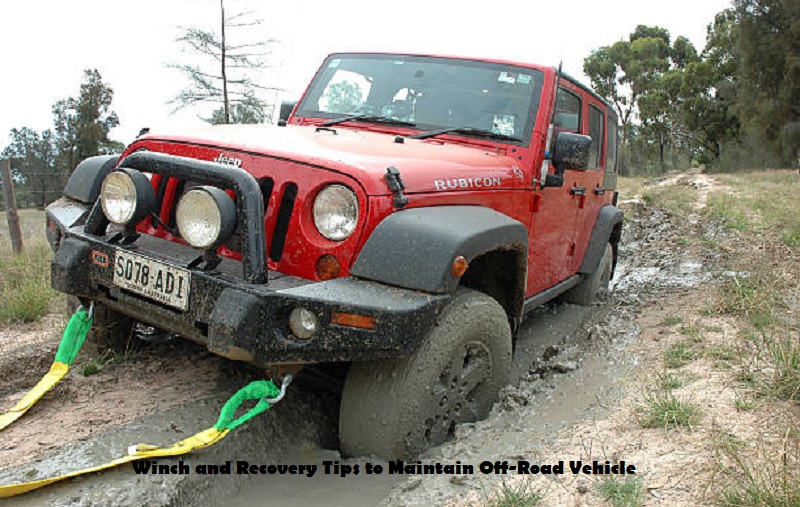
This technique is needed when the vehicle loses traction and cannot continue the journey on its own. For example, vehicles that lose tire grip often sink into mud or sand. So that the wheels spin without producing movement.
On rocky terrain, the vehicle can get stuck because the chassis touches the boulder or the wheels hang without contact with the surface. Likewise, rain or damp soil conditions can make it difficult for the vehicle to move. Especially tires that lose traction on slippery surfaces.
Sometimes, on hilly tracks or steep slopes, vehicles can skid to the point of being unable to climb. So it requires help to pull it up. Winch and recovery itself tend to prioritize safety and efficiency. Before understanding how to recover, let’s get to know one by one the equipment needed.
- The first equipment is a winch. As stated above, the core device used to pull this vehicle has a minimum pulling capacity of 1.5 times the weight of the vehicle.
- Recovery ropes are usually from steel or synthetic. Its function is to connect the winch to the anchor point or other vehicle.
- Next there is a snatch block to help increase the pull strength of the winch. They also direct the cable to a more strategic position.
- Shackle to connect the recovery rope to the anchor point or vehicle.
- The anchor point is usually a tree, large rock or other stable vehicle to be a support when using the winch.
- Protective gloves so as not to injure when handling recovery equipment.
Steps to Recovery
After understanding what equipment is needed, the next step is to know the process of winch and recovery. We can see the practice on YouTube 4X4 Australia for basic knowledge. To make it clearer, you can follow the steps below.
1. Evaluate the Situation
Dean Mellor on YouTube 4X4 Australia teaches, before starting, make sure you understand the terrain conditions, vehicle position and possible anchor points. Also pay attention to additional risks such as landslides or broken winch cables due to heavy conditions.
2. Prepare Equipment
After that, make sure all recovery equipment is ready to use and in good condition. Check the winch cable for damage or fractures. Choose a large tree, solid rock or if there is another vehicle as an anchor. If using a tree, install a protective strap to avoid damage to the trunk.
3. Connect the Winch Cable or Rope
If the anchor is ready, the winch and recovery step continues the process of connecting the rope to the anchor point. We can do this using a shackle or recovery rope. If necessary, use a snatch block to increase the pull of the winch, so that it will be stronger.
4. Secure the Surrounding Area and Start Operation
Make sure there are no people in the winch cable area, especially in the tensioned cable zone. The reason is, if the cable breaks, it can be dangerous. Use the winch slowly and steadily to pull the vehicle. Do not rush because sudden pulling can damage the equipment and vehicle.
5. Check Vehicle and Storage
Once the off-road vehicle is free, check the undercarriage to make sure there is no damage that could affect further travel. If it is confirmed to be okay, clean it and store the equipment back in a safe place. Done.
Overall, winch and recovery tips are essential skills for off-road enthusiasts. By understanding when to use the technique, choosing the right equipment and following the right steps, it will certainly be easier to face various challenges. /Edit